
It looks like a leather pouch. It’s actually made of clay.
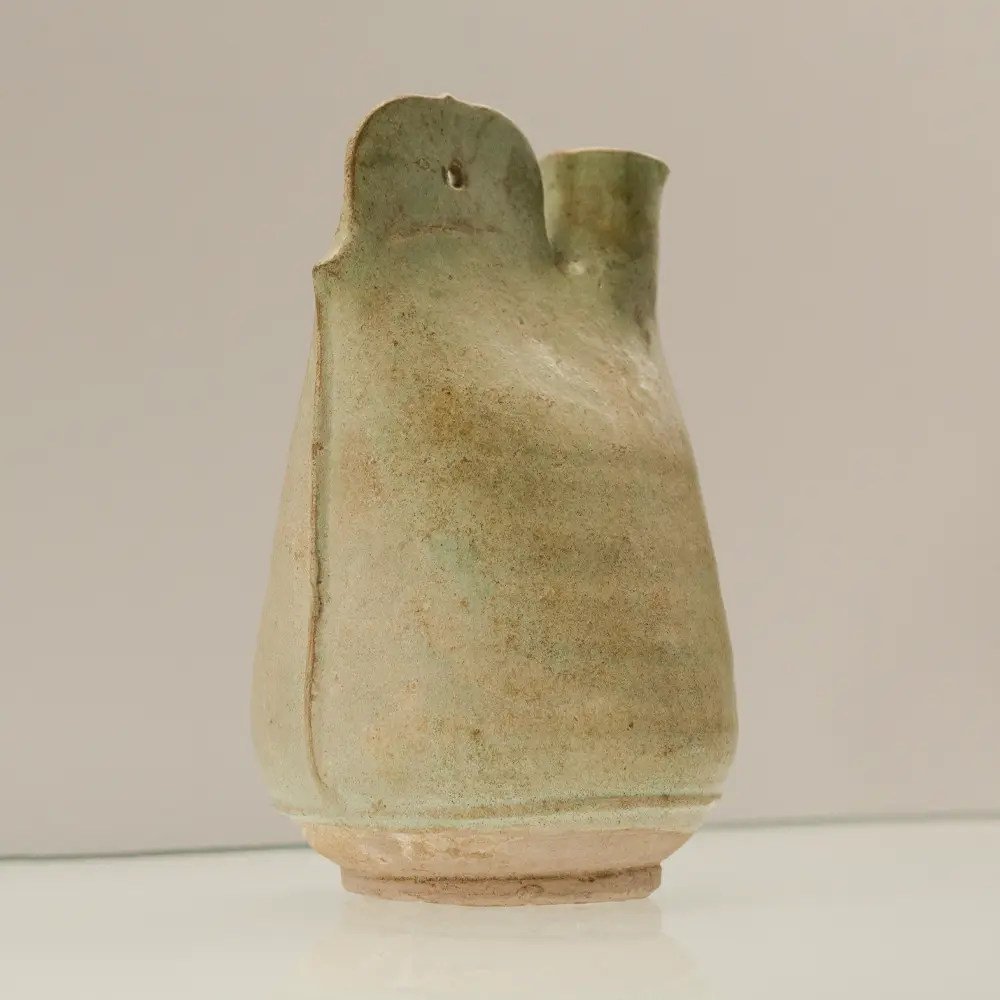
This is a green glazed cockscomb pot, a horseback drinking flask made nearly 1,000 years ago during China’s Liao dynasty. It was shaped to match the form of a traditional nomadic leather water sack — right down to the structural details.
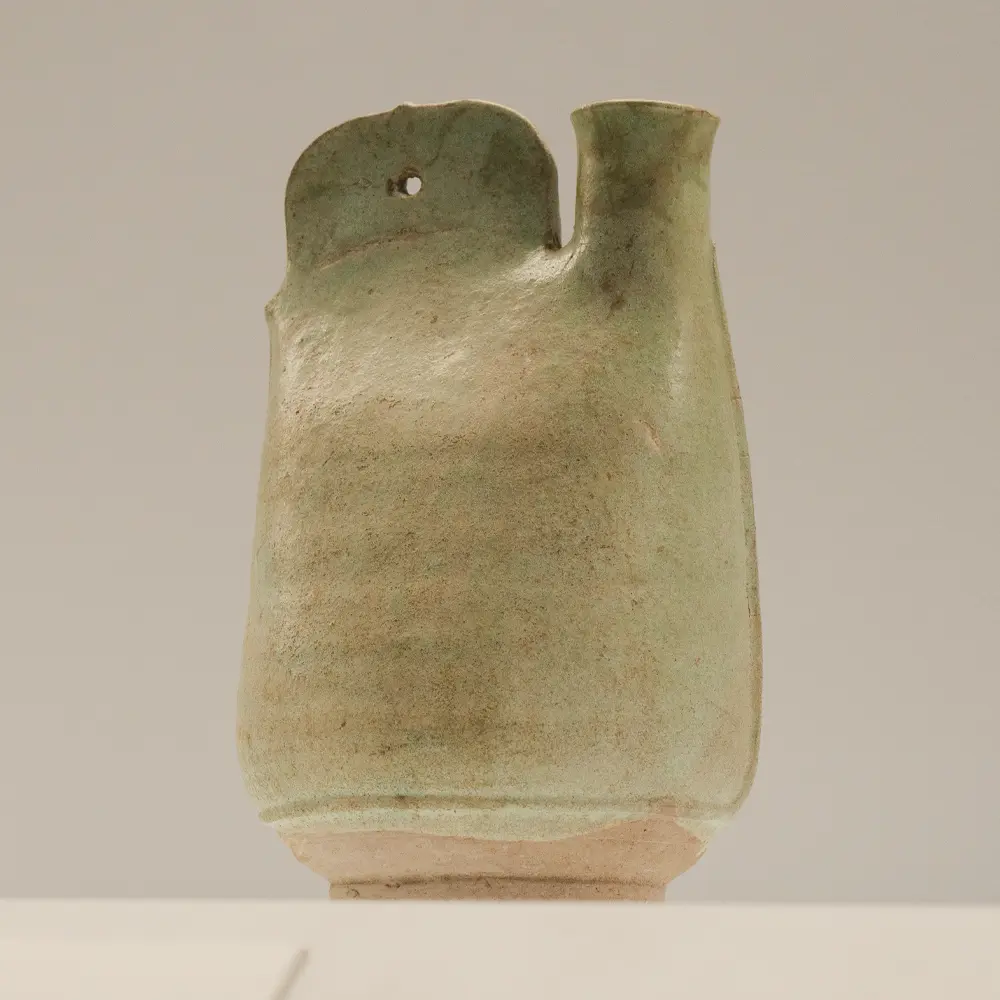
Name: Green Glazed Cockscomb Pot (Horseback Drinking Flask)
Period: Liao Dynasty, 916–1125 CE
Material: Earthenware (low-fired clay ceramic) with lead green glaze
Origin: Khitan nomadic culture, northern East Asia
Location: Shanghai Museum, China
Dimensions: Approx. 22 cm in height
Key feature: Shaped to mirror the design of a stitched leather water pouch
Built for life on horseback
The flat, slim profile of this flask was designed on purpose.
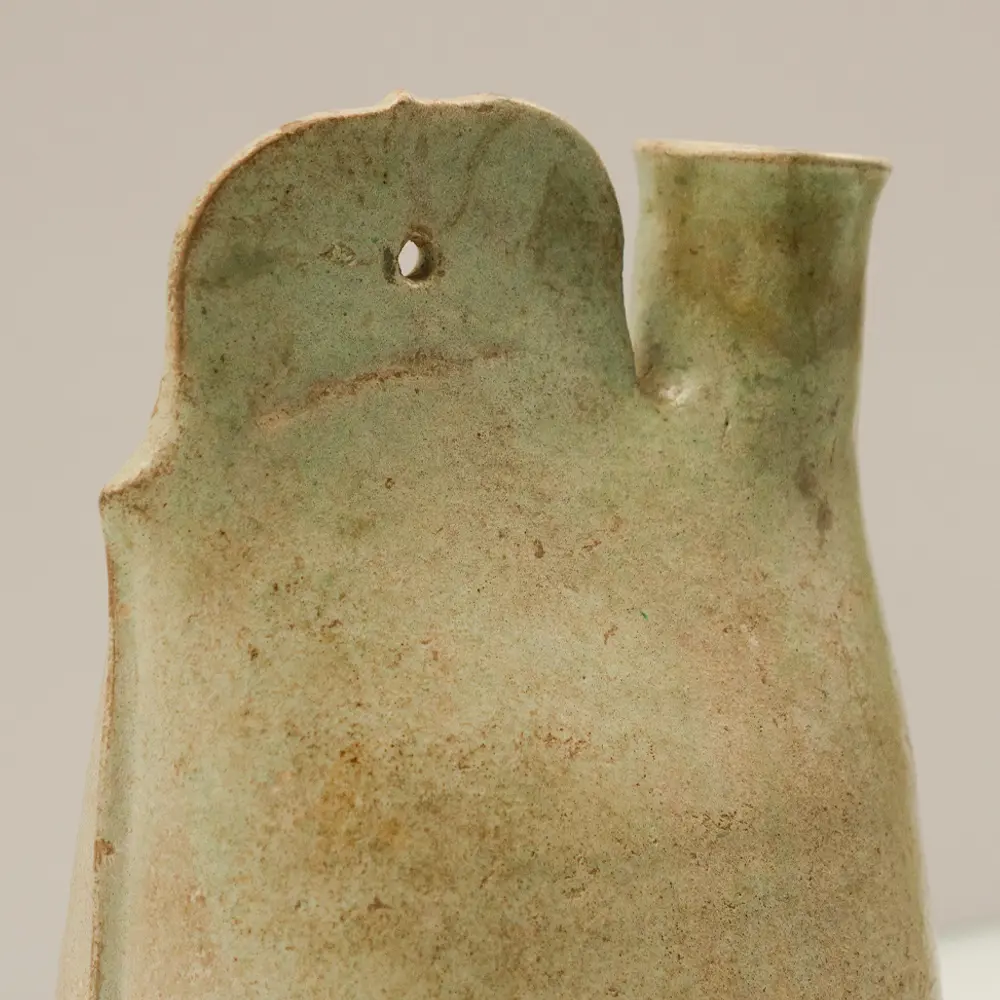
It was made to sit close against a horse’s side, so it would stay steady during long rides across the grasslands. The wide, curved spout at the top looks like a rooster’s comb — which is how it got the “cockscomb” name.
Two small holes sit on either side of the spout. Riders would thread a leather cord through them to tie the flask to a saddle or belt.
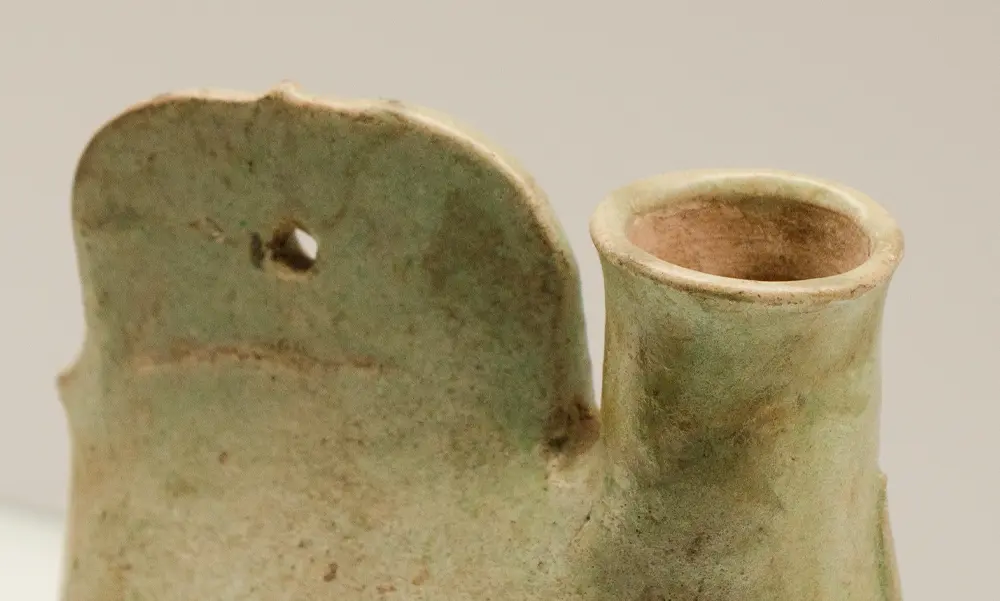
Raised ridges run along the edges of the body, similar to the stitched seams on a hide water pouch. For the Khitan people who used these flasks, this familiar shape was as practical as it was recognizable.
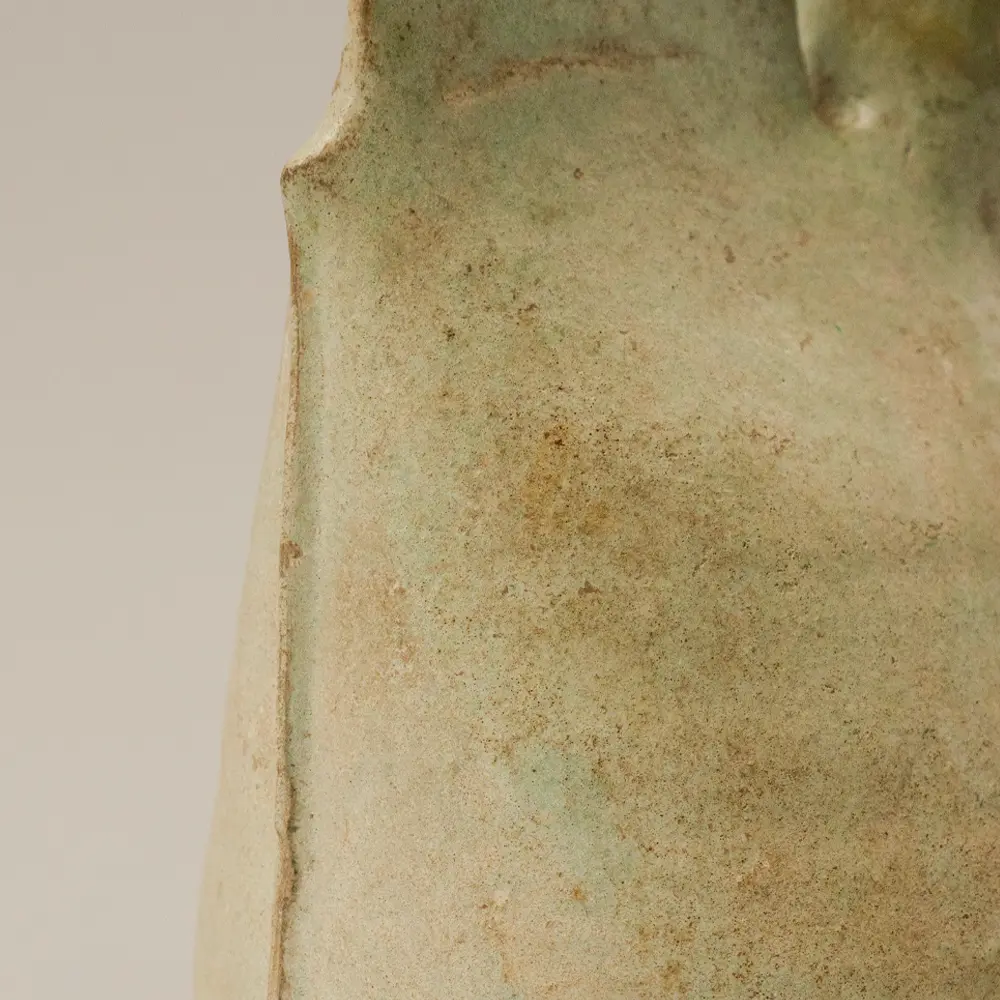
Traditional leather pouches were light and tough, but they absorbed flavors, were hard to clean, and could leak over time. Ceramic addressed many of those practical issues — while keeping the exact shape riders already used and trusted.
The glaze that gives it a soft, worn look
The pale green color comes from a lead glaze, fired at a low temperature. This technique was adapted from central Chinese kilns and reworked by Khitan potters.
Unlike the smooth, glossy porcelain from southern China — famous for its refined, uniform finish — Liao lead glaze was never meant to look perfectly even. It pools slightly in the crevices, thins over raised edges, and has a soft matte finish that brings to mind the texture of worn leather.
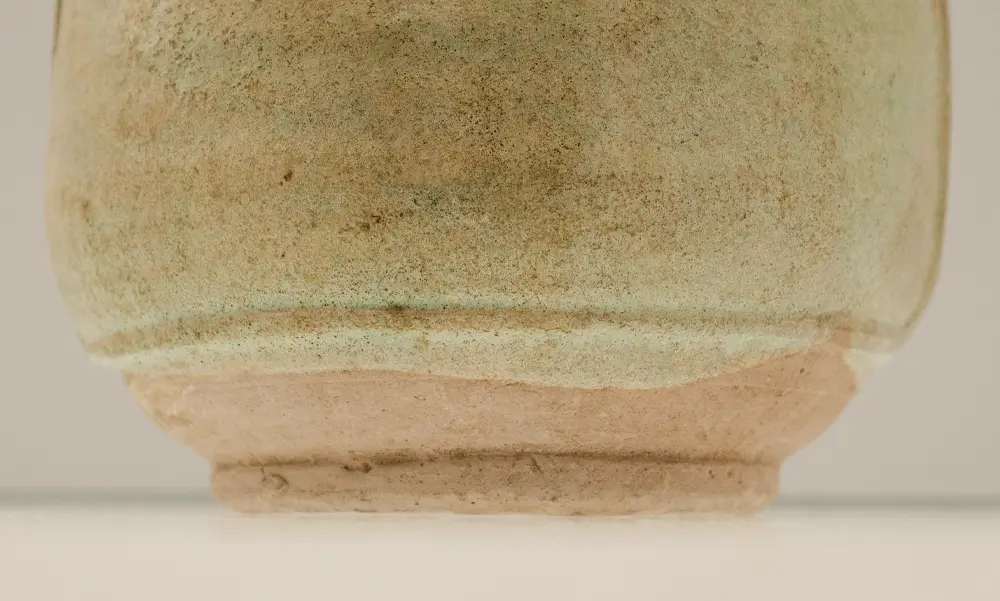
This rough, uneven surface was not a flaw. It fit the tastes and needs of a people who spent most of their lives outdoors. Low-fired earthenware also handles sudden temperature changes better than fine porcelain — a critical advantage for life on the steppe, where days can be hot and nights freezing.
Most scholars view this glaze style as a clear example of cultural exchange. The Khitan did not just copy Chinese ceramic technology. They adjusted it to fit their own way of life, creating what scholars often describe as a distinct nomadic ceramic aesthetic that feels rustic, functional, and quietly beautiful.
A whole way of life, preserved in clay
The Liao dynasty was founded by the Khitan, a nomadic people who ruled a large area of northern East Asia and the Mongolian steppe from 916 to 1125 CE.
Their lives centered on horses, herding, and seasonal movement. Everything they owned had to be easy to pack, carry, and repair. This flask checks every box.
It was not a luxury object for nobles. It was an everyday tool, used by warriors, herders, and hunters alike. It served as a portable vessel for water on journeys, fermented beverages at tribal gatherings, and possibly medicinal herbs when traveling.
According to most research, the shape of these pots slowly changed over time as Khitan society became more settled — as they built permanent cities and adopted more agricultural lifestyles. Earlier versions like this one are flat and pouch-like, made for riding. Later examples grew taller and more decorative.
Today the Khitan no longer exist as a separate ethnic group, absorbed over centuries into surrounding populations. Most of their traditions and language have been lost. But this ordinary, hardworking pot remains.
It does not tell the story of emperors or battles. It tells the story of regular people: the weight of a full jug against a horse’s side, the relief of cool water after a long ride, the quiet cleverness of solving an everyday problem. The most enduring ancient designs are rarely the flashiest or most expensive. They are simply the things ordinary people made to make daily life a little easier.